
Compare Home and Auto Bundle Quotes by ZIP Code
A ZIP code can begin the quote process, but a useful bundle comparison requires matching property, driver, vehicle, coverage, deductible, and payment information. Compare the bundled total with equivalent separate-policy alternatives before choosing.
Use the same household information for both policies, then compare the bundle with equivalent Home-only and Auto-only results.
Match dwelling limits, roof terms, deductibles, liability, property valuation, and endorsements.
Match drivers, vehicles, liability limits, deductibles, mileage, and optional coverage.
Availability, underwriting, discounts, coverage, and pricing vary by insurer, applicant, property, vehicle, ZIP code, and state.
How to Compare Home and Auto Bundle Quotes
A bundle quote is useful only when compared against equivalent alternatives. Build the Home and Auto policies separately, identify the discount and issuing companies, and calculate the full annual result for each arrangement.
Build Equivalent Home and Auto Quotes
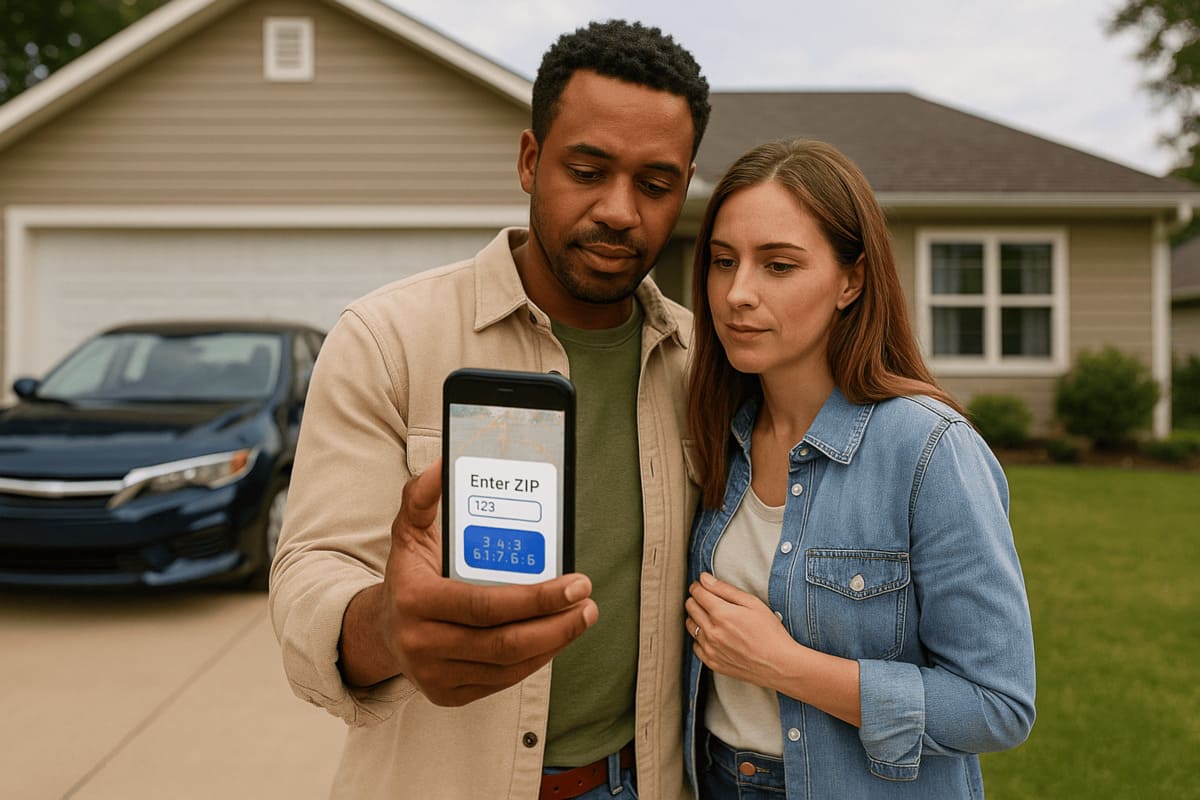
For homeowners insurance, match the dwelling estimate, personal-property valuation, liability limit, loss-of-use coverage, roof treatment, water-related endorsements, and all applicable deductibles.
For auto insurance, match drivers, vehicles, use, mileage, liability limits, uninsured or underinsured motorist coverage, collision, comprehensive, rental, roadside assistance, and applicable deductibles.
A lower combined price may reflect narrower protection rather than a better bundle. Request written quote details before comparing totals.
Calculate Three Annual Totals
Record the annualized price of the bundle and compare it with the sum of the strongest equivalent separate policies. Include policy fees, installment charges, payment-method differences, and optional endorsements.
- Bundle total: eligible Home and Auto policies in the same company relationship.
- Separate Home total: an equivalent homeowners quote available independently.
- Separate Auto total: an equivalent auto quote available independently.
Verify the Multi-Policy Discount
Ask where the discount appears, which policy receives it, when it begins, whether both effective dates must match, and what policy combinations qualify. The discount name alone does not show the final value.
Confirm whether other discounts can be combined, replaced, capped, or removed when the account changes. Use the written quote instead of assuming that every advertised discount applies.
Identify the Legal Underwriting Companies
Home and Auto policies offered through one bundle relationship are not necessarily issued by the same legal company. Verify the insurer name on each quote, policy form, declarations page, and billing arrangement.
Different underwriting companies can mean separate claims, policy documents, service systems, cancellation rules, or complaint records even when the consumer sees one brand.
Compare ZIP-Specific Home and Auto Factors
The property quote may consider rebuilding costs, roof, construction, fire protection, local hazards, and prior losses. The Auto quote may consider drivers, vehicles, mileage, garaging, traffic, theft, weather, and claim experience.
Do not assume that a ZIP code favorable for one policy produces the best combined result. Compare each policy on its own merits and then calculate the bundle total.
Bundle vs Separate Policies Comparison Table
Use the same worksheet for every arrangement so a discount or convenient billing setup does not hide a coverage difference.
| Comparison item | Bundle arrangement | Separate policies | Decision check |
|---|---|---|---|
| Home coverage | Dwelling, property valuation, roof, liability, endorsements, and deductibles | Use the same limits, terms, and property information | Are both Home quotes equivalent? |
| Auto coverage | Liability, uninsured motorist, collision, comprehensive, options, and deductibles | Use the same drivers, vehicles, limits, mileage, and options | Are both Auto quotes equivalent? |
| Insurance companies | Identify the legal Home and Auto issuing companies | Identify each independent insurer and service channel | Who issues, bills, services, and handles claims? |
| Discounts | Multi-policy and other eligible discounts | Independent policy, payment, safety, or affinity discounts | Which discounts are documented and renewable? |
| Annual cost | Home + Auto premium, fees, and payment charges after discounts | Separate Home total + separate Auto total | Which equivalent arrangement costs less annually? |
| Renewal risk | One policy change may affect the other policy's discount or account | Each policy can be reviewed or moved independently | What happens after cancellation or nonrenewal? |
Billing, Claims, and Account Convenience
A bundle may offer coordinated account access, agent service, payment tools, or renewal dates. Confirm whether billing is actually combined and whether both policies appear in one account.
One event that damages the home and vehicle can still involve separate policies, deductibles, claim numbers, adjusters, and issuing companies. Do not assume bundling creates one claim or one deductible unless the written policy terms specifically provide it.
When Separate Policies May Be Stronger
Separate policies may be preferable when one insurer offers materially stronger Home coverage while another offers better Auto terms, a lower equivalent total, more suitable deductibles, or better eligibility.
The ability to change one policy without affecting a multi-policy discount can also be useful when rates, underwriting, vehicles, drivers, property conditions, or insurer availability change.
Questions to Ask Before Switching
- Which legal companies will issue the Home and Auto policies?
- Are the proposed limits, deductibles, valuation terms, and endorsements equivalent?
- What is the annualized bundle price after fees and payment charges?
- Which discounts are included, and what keeps them active?
- Will the policies share an account, bill, renewal date, agent, or claims system?
- What happens if one policy is cancelled or nonrenewed?
- Are there cancellation fees or lender requirements?
- When do the replacement policies become effective?
- Can the current policies remain active until written confirmation is received?
Related Home and Auto Bundle Guides
Use these pages when the comparison requires more detail about bundle structure, discounts, coverage, ZIP factors, or insurer selection.
Compare the general advantages and tradeoffs of bundled and separate Home and Auto policies.
Review eligibility, policy relationships, renewal effects, switching steps, and bundle limitations.
Check eligibility, proof, telematics, safety features, combination rules, and renewal conditions.
Compare matching coverage, deductibles, companies, fees, discounts, and full annual cost.
Review local hazards, state markets, insurer availability, rebuilding costs, and location-specific deductibles.
Verify legal insurers, licensing, complaints, financial information, claims access, and policy service.
FAQ About Home and Auto Bundle Quotes
Q: Does bundling Home and Auto always cost less?
A: No. Compare the bundled annual total with equivalent Home and Auto policies from separate insurers.
Q: How should I compare a bundle quote fairly?
A: Match property details, drivers, vehicles, limits, deductibles, valuation terms, endorsements, fees, and payment assumptions.
Q: Are bundled Home and Auto policies always issued by one company?
A: No. A brand or agency relationship may use different legal underwriting companies for the two policies.
Q: Does one event create one claim and one deductible?
A: Not necessarily. Home and Auto are separate policies and may involve separate claims, deductibles, adjusters, and issuing companies.
Q: What happens if one bundled policy is cancelled?
A: The remaining policy may lose a multi-policy discount or require a new billing arrangement. Confirm the insurer's written rules.